Cow Road Safety Support — Preventing Road Accidents Involving Cows
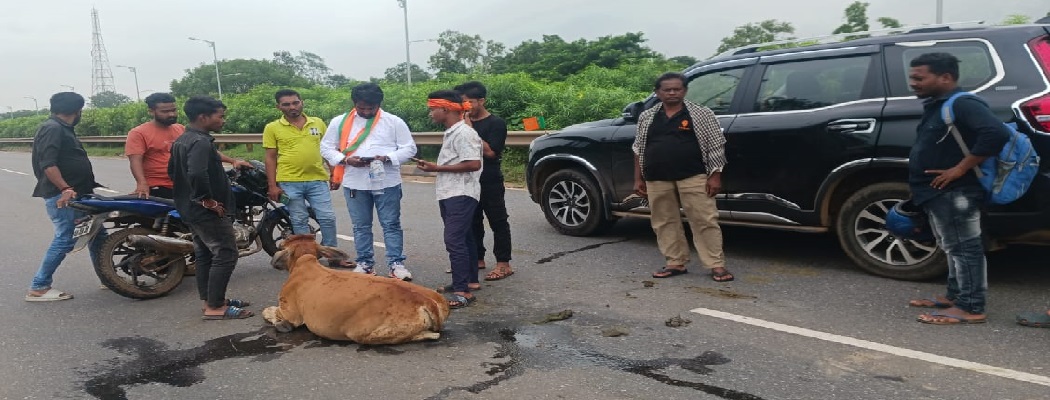
Volunteers assisting a cow on a roadside as part of the Cow Road Safety Support initiative by Indbharat Global Foundation

Cows and other large animals on busy roads create critical safety concerns for animals, drivers, passengers, and local communities alike.

Stray, abandoned, or unattended cattle are continuously exposed to vehicular traffic, particularly along national highways, high-speed bypasses, busy road intersections, markets, and densely populated peri-urban corridors. Ensuring the safety of cows on our roads is a vital priority at Ind Bharat Global Foundation. Our Cow Road Safety Support programme is dedicated to significantly reducing the incidence of road accidents involving cattle, protecting these revered animals from catastrophic trauma, and fostering a culture of mutual road safety and compassion.

By implementing practical, multi-stakeholder interventions—including high-visibility reflective collars, emergency rescue and relocation, infrastructure enhancements, driver education campaigns, and active community patrols—we work to create safer transit environments for cattle and motorists. Our objective is simple: help protect cows while contributing to safer roads for everyone who travels them.

The Problem of Cow-Related Road Accidents

Stray cattle on roadways create hazardous scenarios for both animals and motorists. A sudden movement across lanes gives drivers little time to react, turning road accidents into a dual crisis of animal welfare and public safety:

01

Uncontrolled Movement

Unpredictable cattle crossing or resting on highway median strips during peak traffic hours.

02

High-Speed Traffic

Vehicles moving at excessive speeds on bypass corridors with insufficient stopping distances.

03

Poor Nighttime Visibility

Unlit rural stretches and dark cow hides rendering animals virtually invisible until impact.

04

Populated Town Passages

Major highways cutting directly through busy village markets, junctions, and residential hubs.

05

Lack of Shelter Infrastructure

Inadequate local gaushalas or holding pens forcing non-milking cattle onto open roads.

06

Unfenced Highway Access

Absence of perimeter fencing or cattle barriers along high-speed expressway corridors.

07

Inadequate Driver Caution

Lack of cautionary warning signs and driver awareness regarding animal behavior on roadways.

08

Abandonment of Cattle

Desertion of elderly or non-productive cattle leading to desperate foraging near road trash.

Proactive prevention is essential to protect both innocent cattle lives and human travelers on Indian roads.

Our Core Road Safety Programs

Our interventions combine visual safety gear, emergency animal relocation, infrastructure improvements, and civic awareness:

Night Visibility

Reflective Collars & Identification Tags

Low visibility during night hours is the single greatest cause of highway collisions involving cattle. Our safety gear initiative addresses this risk directly:

  • Fitting durable, weather-resistant micro-prismatic reflective neck bands.
  • Reflecting vehicle headlights from over 300 meters away to provide ample braking time.
  • Providing identification tags to track, monitor, and manage cattle movements.
  • Safe, stress-free collar installation conducted by trained volunteer handlers.
  • Regular patrolling for collar inspection, cleaning, and replacement of damaged gear.
Reflective collars are a vital visibility-support measure to prevent night accidents.
Accident Prevention

Rescue & Relocation from High-Risk Zones

When cattle congregate in hazardous traffic zones, prompt and safe relocation removes the immediate threat of collisions:

  • Monitoring high-accident highway stretches, blind turns, and expressways.
  • Deploying dedicated transport vehicles equipped with non-slip hydraulic loading ramps.
  • Humane handling techniques preventing animal panic and secondary highway hazards.
  • Safely relocating vulnerable cattle to verified partner gaushalas and rural sanctuaries.
  • Providing immediate veterinary first-aid to any animal showing signs of injury or trauma.
Road Infrastructure

Infrastructure Enhancements & Signage

Physical road modifications alert drivers and create structured zones for animal and vehicular separation:

  • Installing high-intensity reflective road signs warning drivers of frequent cattle crossings.
  • Collaborating with authorities to place speed breakers and rumble strips near crossing corridors.
  • Installing retro-reflective road stud markers along curves frequented by stray cows.
  • Creating designated safe crossing zones to help cattle navigate busy roadways safely.
  • Advocating for median barrier maintenance to deter cows from resting on high-speed medians.
Community Patrols

Community Patrols & Driver Awareness

Road safety relies on vigilant drivers and active grassroots community participation:

  • Conducting driver workshops, flyer distributions, and social media road safety drives.
  • Educating motorists to stay alert, reduce speed in low-light zones, and avoid sudden swerving.
  • Organizing local volunteer patrol groups to guide cows safely away from highway corridors.
  • Engaging farmers and village panchayats to develop safe grazing grounds away from busy roads.
  • Establishing community reporting networks to alert rescue teams about vulnerable cattle.

Our 7-Step Rescue & Relocation Process

When cattle are identified in hazardous road environments, our team executes a structured relocation protocol:

Step 01

Receiving Report

Receiving incoming incident alerts with exact GPS landmarks and animal status.

Step 02

Assessing Situation

Evaluating traffic volume, speed risks, animal mobility, and physical injuries.

Step 03

Team Coordination

Dispatching trained animal handlers, protective traffic gear, and an ambulance.

Step 04

Safe Approach

Calming the animal gently using halter leads without causing panic or highway dashes.

Step 05

Secure Transit

Loading the animal via low-gradient ramps into specialized cattle transport.

Step 06

Shelter Transfer

Transferring the cow to a verified partner gaushala or safe rural sanctuary.

Step 07

Ongoing Care & Health

Providing veterinary assessment, nourishing green fodder, and long-term sanctuary care.

Multi-Agency Coordination

Collaboration with Traffic Authorities & Police

Animal road safety is most effective when non-profit welfare groups, civic administration, and law enforcement work hand-in-hand. Ind Bharat Global Foundation coordinates responsibly with relevant regional authorities:

Traffic & Highway Police: Alerting patrols regarding cattle clusters on expressways.
Municipal Corporations: Coordinating urban stray cattle management and impound relief.
Animal Welfare Groups: Sharing rescue logistics and shelter bed availability.
Village Panchayats: Organizing designated grazing corridors away from high-speed roads.
Distress Reporting

What Information to Provide When Reporting

When contacting our road safety desk, sharing accurate details allows our team to respond quickly and safely:

  • Exact Location: Road name, highway milestone, or GPS map pin.
  • Nearby Landmark: Prominent petrol pump, temple, toll plaza, or bridge.
  • Direction of Travel: Which side of the highway or lane the animal is on.
  • Number of Animals: Single cow, mother with calf, or an entire herd.
  • Condition: Whether the animal appears injured, trapped, or aggressive.
  • Photographs: Clear photos or video if they can be captured safely from a distance.
  • Your Contact Details: A phone number so our rescue drivers can coordinate on arrival.
⚠

Report Stray Cows on Roads

Encountered cattle trapped on a highway or in a high-risk traffic zone within our operational areas? Contact our desk immediately.

Contact Road Safety Desk Never put yourself in traffic danger to photograph or approach an animal.

Our Road Safety Impact

Transparent, verifiable indicators measuring our real-world outcomes in preventing road accidents, fitting reflective collars, and relocating vulnerable cattle across India.

2,400+
Reflective collars & tags fitted
420+
Cattle rescued from high-risk road locations
310+
Cows safely relocated to sanctuaries
65+
Driver road-safety awareness drives
45+
High-risk highway accident spots covered
29
States covered across India
500+
Total foundation initiatives completed
100%
Free reflective gear for vulnerable cattle

Support Road Safety — How You Can Help

Road-safety initiatives require resources for animal rescue ambulances, reflective collars, community workshops, and emergency veterinary care:

Support Road Safety — Donate

Fund high-intensity reflective collars, rescue ambulance fuel, highway patrol gear, and emergency first-aid supplies.

Donate for Road Safety

Report Stray Cattle

Seen cattle stranded in dangerous highway medians or accident-prone corridors? Send us location details to coordinate relocation.

Report Stray Cows

Volunteer for Road Safety

Join local volunteer groups to assist in reflective collar fitting drives, driver awareness flyer campaigns, and night safety monitoring.

Join as a Volunteer

Frequently Asked Questions

Clear answers regarding our cow road safety initiatives, reflective collars, rescue procedures, and volunteer opportunities.

The Foundation's road-safety activities include fitting high-visibility reflective collars, emergency rescue and safe relocation from highways, driver awareness campaigns, highway signage coordination, and community cattle patrol groups.

You can contact our team through our official Contact Portal. Provide the exact highway or road location, nearest landmarks, and photos if safe to take, so our rescue desk can coordinate assistance.

Yes. We fit durable, weather-resistant reflective neck bands that brightly reflect automobile headlights, significantly improving the nighttime visibility of cattle to oncoming drivers from hundreds of meters away.

Yes. Reflective collars are distributed and fitted free of charge to stray and free-roaming cattle in accident-prone areas through donor contributions and dedicated volunteer drives.

Yes. Volunteers participate in distributing driver awareness materials, identifying high-risk highway spots, assisting in collar fitting drives, and guiding cattle away from live lanes under trained supervision.

Prioritize your personal safety; keep yourself and other road users safe away from traffic and contact our rescue desk or local emergency authorities immediately. Do not attempt to move an injured animal yourself.

Yes. We collaborate with traffic police, highway authorities, and municipal bodies to share data on high-accident blackspots and coordinate prompt rescue assistance.

Building Safer Roads for Animals & Communities

Cow road safety requires cooperation between animal-welfare organisations, local communities, road users, and civic authorities. Through responsible rescue, awareness, identification, and community-support initiatives, Ind Bharat Global Foundation works to reduce road risks for cows while promoting safer driving behavior.

Road Safety & Animal Welfare Protocol

Ind Bharat Global Foundation is an officially registered non-profit organization operating in compliance with statutory Indian governance standards. All cattle road safety, reflective collar fitting, and relocation activities are carried out under humane animal handling guidelines in accordance with the Prevention of Cruelty to Animals Act, 1960 and Indian Motor Vehicles Act safety provisions. Reflective collars serve as visibility-support aids and do not replace the fundamental necessity of cautious driving. All donations are allocated transparently toward reflective gear, rescue ambulances, and animal shelter support.

Together we can Uplift & Empower Communities

× Full Screen Image
WhatsApp